

Written by: m.wilson – AI Assisted
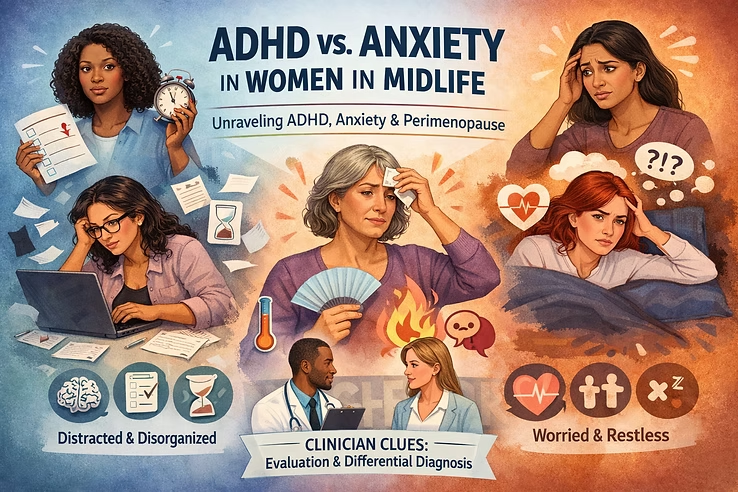
In 2026, there are many people who have not heard of Inattentive ADHD (Attention Deficit/Hyperactivity Disorder with Predominantly Inattentive Presentation). Some may perk up their ears when ADHD is mentioned, wondering for a moment if they might have it – since the symptoms like brain fog, problems with productivity, personal frustration, etc., sound familiar, but definitely not the (external) hyperactivity. Often, such individuals were diagnosed, perhaps at an early age, with depression, social anxiety, or more emotionally focused problems, and were prescribed a neuroleptic. These approaches may have been successful in addressing some of their concerns, but they still find themselves falling short in life, which could mean there’s more to the story.
FUNCTIONAL
The public perception of ADHD is heavily skewed toward the hyperactive image – typically a young, energetic boy who can’t sit still, interrupts constantly, and bounces off the walls. It doesn’t describe as well those who were able to pull through and complete their schoolwork, for example, or fulfill certain expectations in adult life, which is why inattentive ADHD often surprises people:
- It’s “invisible” – Instead of disruptive behavior, inattentive ADHD looks like quietly staring out the window, daydreaming, or seeming apathetic; easy to miss or dismiss.
- It gets misread – Inattentive symptoms are often written off as laziness, anxiety, or mood disorders rather than ADHD, so people don’t associate them with the condition.
- Girls are disproportionately affected – Since ADHD is stereotypically seen as a “boy’s condition,” many people are surprised to learn that girls are far more likely to have the inattentive sub-type, and are frequently under-diagnosed as a result.
- The “ADD” confusion – Many people still use the outdated term “ADD” without realizing it’s now classified under the ADHD umbrella as the inattentive presentation.
INTERPERSONAL FRICTION
ADHD is not primarily an interpersonal problem like anxiety or depression, but it can create interpersonal challenges as a secondary effect.
Inattentive symptoms are far less likely to be recognized by parents, teachers, and even medical professionals, which means many people go undiagnosed for years, often only discovering it in adulthood.
Anxiety & Depression are fundamentally internal emotional states that directly affect how a person relates to others (e.g., social withdrawal, fear of judgment, irritability, low self-worth). Their core symptoms often manifest in relationships. ADHD, on the other hand, is a neurodevelopmental disorder of executive function, affecting attention, impulse control, working memory, and emotional regulation. The interpersonal issues arise indirectly from these cognitive and behavioral traits.
- Forgetting commitments – More likely to miss appointments, deadlines, or social plans due to poor time perception or difficulty initiating tasks – not because they don’t care.
- Difficulty listening – May appear distracted, “zoned out,” or uninterested in conversations, even when they’re trying hard to focus.
- Emotional dysregulation – Can lead to sudden frustration, overwhelm, or shutdowns during social interactions, especially when overstimulated or mentally fatigued.
- Procrastination or missed follow-ups – Seen as unreliable, even though they may be deeply invested in the relationship or task.
- Over-apologizing or people-pleasing – Common coping mechanisms to mask perceived failures or avoid conflict.
The characteristics of Inattentive ADHD don’t usually involve hyperactive or impulsive behaviors (like interrupting or blurting out), so the interpersonal issues are often subtler and more likely to be misread as aloofness, disinterest, or “quiet laziness.” And because inattentive ADHD is “invisible,” its effects are often misunderstood, both by others and by the person themselves. This individual may be internalizing criticism as personal failure, which can lead to anxiety or depression, which then becomes an interpersonal problem on top of the ADHD. Therefore, inattentive ADHD can create interpersonal friction, but it’s rooted in executive function struggles, instead of social relationships.
PHYSICAL CLUES
Gastric discomfort is commonly reported in people with inattentive ADHD, and the connection may be linked to the stress and hyper-vigilance required to maintain focus. The gut-brain axis plays a significant role in this relationship, as the brain and gastrointestinal system are closely interconnected through neural, hormonal, and immune pathways.
Inattentive ADHD often involves heightened mental effort to stay on task, which can lead to chronic stress and anxiety – factors known to disrupt gut function. This stress response may contribute to symptoms like constipation, flatulence, and abdominal pain, which have been observed more frequently in children with ADHD compared to neurotypical peers. Research suggests that individuals with ADHD are 63% more likely to develop irritable bowel syndrome (IBS) than their neurotypical counterparts, further supporting the link between ADHD and gastrointestinal issues.
Additionally, immune dysregulation and altered gut microbiomes may play a role in both ADHD and gastrointestinal symptoms, creating a potential feedback loop where stress and cognitive demands exacerbate digestive problems. While the exact mechanisms are still being studied, the evidence points to a complex interplay between attentional demands, stress, and gut health in inattentive ADHD.
Beyond gastric discomfort, individuals with inattentive ADHD often experience a range of physical sensations and symptoms as a result of the intense mental effort required to sustain focus and manage executive functions. These physical clues can include:
- Mental fatigue and “brain fog”– Prolonged focus can lead to a feeling of cognitive exhaustion, where thoughts feel numb or blurred, and even simple tasks require significantly more mental energy than usual. This is sometimes described as a “foggy haze” that impairs critical thinking and alertness.
- Physical tension and muscle strain – The brain’s effort to maintain attention can trigger bodily responses, including muscle tension, especially in the neck, shoulders, or jaw, as the body unconsciously braces during periods of high cognitive demand.
- Reduced physical stamina – Mental effort can be as physically draining as physical exertion. The brain’s energy systems (like glutamate levels) deplete after about 90 minutes of peak focus, leading to physical fatigue, headaches, or a need to rest.
- Restlessness or irritability – Even without hyperactivity, the internal struggle to stay focused can manifest as fidgeting, pacing, or emotional dysregulation, especially when tasks feel overwhelming or unengaging.
- Sleep disturbances – The mental hyper-vigilance and rumination associated with trying to force focus can delay sleep onset or reduce sleep quality, creating a cycle of fatigue that further impairs concentration.
These physical clues are not just side effects – they’re signals that the brain is working overtime to compensate for executive function challenges, and they often go unnoticed or are misattributed to stress or poor habits. Recognizing them can help validate the real, embodied experience of inattentive ADHD.
