

5. The United States Abridges the Human Right to Bodily Autonomy” by World Without Genocide (May 2025) addresses comments that were made at the 69th UN Commission on the Status of Women, in which UN Secretary-General António Guterres said:
“Women’s rights are under siege. The poison of patriarchy is back – and it is back with a vengeance… Around the world, the masters of misogyny are gaining in strength, confidence, and influence.”
This WWG report was one of the most inclusive studies referring to not only women, but ‘all individuals, especially women, girls, gender-expansive people, the disabled, the elderly, and the ill,’ who “experience abridgment of their right to bodily autonomy.” The authors describe the UN’s influential role in affirming the importance of bodily autonomy and vividly illustrate the urgency of what loss of bodily autonomy really is. Bodily autonomy can be understood within the context of extreme situations, such as domestic violence, femicide, elder abuse, sexual assault, and third-world societies. It also factors in climate change impacts, stating that 80 percent of the victims suffering displacement are women. The essential components of bodily autonomy are listed out in the Universal Declaration of Human Rights UDHR, which include: Right to Life, Liberty, and Security of Person, Reproductive Health and Rights, Right to Privacy, Equality, Non-discrimination, and Freedom from Slavery and Torture.
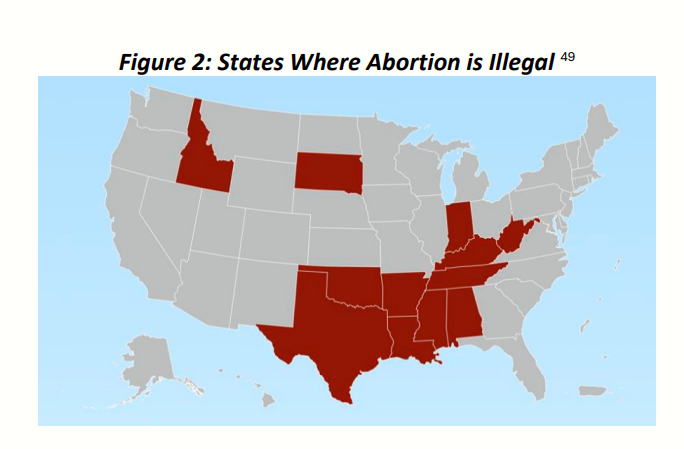
There are many documents, like the Convention on the Elimination of All Forms of Discrimination against Women (CEDAW), designed to protect bodily autonomy through overseas assistance, which is often referred to as a bill of rights. These remedies exist to create protections for women within the scope of human rights issues and to assign consequences that can be mitigated internationally. The article Diminishing Reproductive and Bodily Autonomy in the USA by the Global Justice Center (April 2025) also states that restrictions instituted in the U.S. during this post-Dobbs era are in direct contravention of its international treaty obligations. GJC names the state-level abortion bans, which exist in 41 states as of March 2025, as a major factor in diminishing bodily autonomy and the violations of the right to health caused by forced pregnancies. This 19-page paper provides a dire outlook on the current trends in human rights, which are directly relational to bodily autonomy, access to abortion, and health care services. It points out that the US is falling below the threshold of competency for the upcoming 4th Universal Periodic Review UPR:
[U.S. policies are currently] incompatible with international human rights law, as highlighted during the US’s 3rd UPR. The government’s failure to ensure the provision of safe, legal, and accessible healthcare, including abortion, violates its obligations to protect and fulfill the rights to life; health; privacy; liberty and security of person; to be free from torture and other cruel, inhuman, or degrading treatment or punishment; freedom of movement; freedom of thought, conscience, and religion or belief; equality and non-discrimination; and to seek, receive, and impart information.
Additionally, this paper contains detailed patient examples, such as “a well-documented early fetal demise with no cardiac activity on an ultrasound,” who was told in her home state of Texas by her provider that no one in the state would help her. So the patient flew to New Mexico, and encountered many other hurdles, resulting in a weeks-long delay in her treatment, during which time she could have succumbed to some very grave complications. Another case involves a 12-year-old victim of incest who was raped and impregnated by her grandfather and forced to carry the pregnancy. There are also recommendations and reviews of past suggestions for necessary improvements.
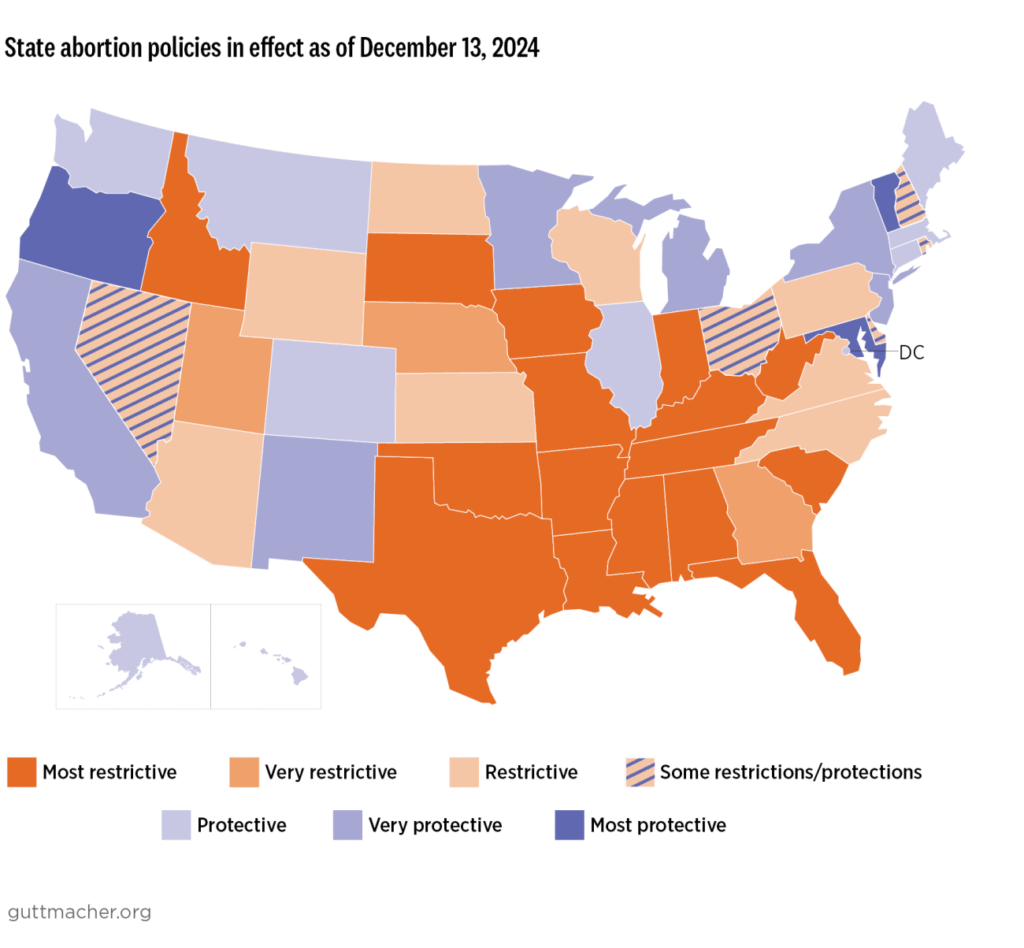
This report, State Policy Trends 2024: Anti-Abortion Policymakers Redouble Attacks on Bodily Autonomy from the Guttmacher Institute (December 2024), is a comprehensive overview of legislative efforts aimed at increasing pregnancy criminalization, which directly results in situations where individuals lose their autonomy and are forced to continue pregnancies. The article provides interactive maps and outlines some of the main points. Imagine dying while trying to get medical help! “Three women in Texas—Porsha Ngumezi, a Black woman, Josseli Barnica, an immigrant from Honduras, and Neveah Crain, a teenager— died after they were denied miscarriage care under the state’s abortion ban.”
The US Administration’s Assault on Global Reproductive Health and Autonomy in the Health and Human Rights Journal (NIH) (February 2025) is another article focusing on how U.S. federal actions and policies undermine the “broader principle of bodily autonomy” in the global policy perspective, through its funding freezes and other measures, which can trigger millions of unintended pregnancies worldwide. <<BACK
