

Written by: Fatima Khurseed
As a woman residing in Pakistan, I am acutely aware of the inherent risks I face whenever I step outside my home. The simple act of venturing beyond my doorstep demands a complete inventory of self-defense strategies followed by the reinforcement of my protective boundaries. It’s a reality I confront daily, forcing me to think ahead and prepare for potential incidents that could jeopardize my safety.
Of course, as a man in this society, I would not carry the same heavy burden of concern. In the event of an assault, I would possess a physical advantage, allowing me to protect myself effectively. Instead, as a woman, there’s the looming specter of danger confining my choices, imposed by those who are physically stronger. Should I opt for a solitary evening walk, or must I enlist the presence of a male companion for my own security?
Workforce Participation: The national Female Labor Force Participation Rate stands at 24.4%, compared to over 70% for men – Gallup Pakistan
80.1% of working-age Pakistani males participate in the labor force compared to just 24.0% of females – World Bank
Dampening Women’s Progress: The Impact of Limited Mobility in Pakistan
Educated women seeking career progress often reach a crossroads after completing their education, as they face a disheartening range of restrictive choices. For those who do manage to secure an acceptable position, there is the issue of commuting to their workplaces, when it must be decided to either: procure the assistance of a male family member to accompany them or bear the cost of hiring a personal driver. It’s a stressful dilemma that is both financially burdensome and emotionally taxing.
AI: The Ridership and Ownership Gap
Vehicle ownership and licensing infrastructure in Pakistan create entirely different transit realities for men and women: – Science Direct
Alternative Transit Exclusion: Cultural norms largely bar women from using highly flexible, economical transport alternatives like bicycles or motorcycles. As a result, men seamlessly transition between private motorbikes and public transit, while women remain bound to walking, expensive private ride-hailing, or formal buses. – World Bank Blogs / World Economic Forum
The Commuter Split: Across modern Bus Rapid Transit (BRT) networks, such as the Karachi BRT, female ridership stands at roughly 20%. In highly specialized networks like the Peshawar BRT, focused safety interventions raised female ridership to 30% (up from just 2% historically). The remaining 70% to 80% of commuters are male. – Science Direct
The Licensing Deficit: In major hubs like Lahore, women own 1.7% of registered vehicles. Furthermore, only 7.4% of active driving licenses are held by women. – J-PAL / Science Direct / IGC
A survey conducted by Gallup Pakistan in 2019 found that only about 10% of women in Pakistan used public transportation, while 66% relied on private transportation or had no regular commute.
If one chooses public transport, many fathers, driven by genuine concern, hesitate to endorse the idea of their daughters commuting alone, especially during the odd hours often required in certain professions.
Hence, these constraints impose severe limitations on the aspirations of women in Pakistan, as they navigate a society seemingly designed to deny them the independence and opportunities so rightfully deserved. This is due in part to the prevailing sentiment, one very difficult to ignore, that women in Pakistan must not be unaccompanied and should instead be “courted” as soon as they reach a certain age. Because of social norms dictating that a woman should not mingle with unrelated men (na-mahram), a practice deeply tied to the cultural concept of Purdah [gender segregation and female modesty, (AI)], a woman functioning in her daily life, while alone, is synonymous with vulnerability. This sobering reality underscores the urgent need to address the challenges women face while in pursuit of their dreams and aspirations; as they strive for a society where independence is not a luxury but a fundamental right.
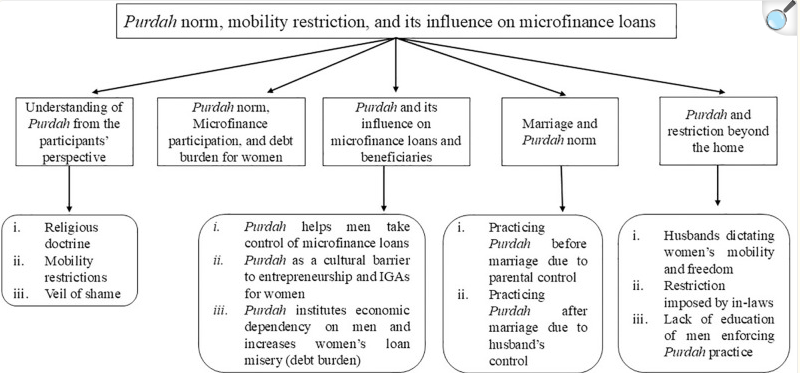
Unfortunately, as a result, sadness permeates every facet of women’s lives, as they are affected during the simplest daily commutes to leisurely outings. It’s a pervasive societal hindrance that holds them back from realizing their full potential. Furthermore, in Pakistan, accountability for such restrictiveness is often lacking, so that women are left grappling with choices unduly influenced by fears and insecurities, which significantly limit not only their personal choices but also their prospects for growth and advancement.
